

More:
News & Stories
Connecting Brains – The ISBFC Conference
The International Symposium on Brain Function and Cognition (ISBFC) was jointly organized and sponsored by Holon Institute of Technology (HIT) and Waseda University, a partnership that lay the groundwork for rich scientific exchange between the two institutions and held at the Waseda Research Innovation Center in Tokyo, the symposium was centered on “Neural Codes of Language and Action” — mainly exploring how language and motion are imaged, represented and processed in the human brain.

Leadership on both sides was substantial. Prof. Hiromu Sakai (Waseda University) served as Chairman of the Organizing Committee, shaping the scientific program and guiding the thematic focus. Dr. Refael Barkan, Vice President for Innovation, Entrepreneurship, and Internationalization at HIT, together with Dr. Michal Balberg (HIT), played key roles in the organization of the event. Dr. Dmitry Patashov (Waseda University) organized the conference and and facilitated collaboration between the institutions.
HIT’s scientific contributions included several speakers and committee members. Dr. Michal Balberg, Senior Lecturer at HIT, gave a keynote lecture titled “EEG-fNIRS Study of Cerebral Hemodynamic Fluctuations”— exploring very low frequency hemodynamic fluctuations in the brain. Prof. Erez Simony gave a keynote lecture titled “Ecological Neuroscience Reveals Surprise and Adaptation in the Human Brain”, using ecological stimuli (movies/stories) combined with machine learning of fMRI scans to analyze neural representations of surprise and adaptation. Mr. Yakir Menahem presented “Cross-Modality and Cross-Subject Decoding of Semantic Categories”, investigating the generalizability of neural codes for semantic categories across different sensory modalities and individuals.
Researchers from Waseda University gave keynote talks on “Dynamics of Semantic Representations in the Human Brain” by Prof. Hiromu Sakai, and “Hand Choice and Neuro-Rehabilitation” by Prof. Rieko Osu.
On the organizing and review side, Dr. Dmitry Goldstein, Dr. Michal Eisenberg, Dr. Revital Marbel, Ms. Ira Ivshin-Guetta and Ms. Marina Michaeli from HIT, together with Prof. Manabu Tanifuji and Ms. Yuri Hatano from Waseda, served on the Organizing and Review Committees, ensuring scientific quality.
The conference featured keynote lectures by world renowned researchers including: Prof. Alexander Huth from University of California, Berkeley gave a presentation titled “Mapping and decoding language representations in fMRI”, Prof. Anat Mirelman from Tel Aviv Sourasky Medical Center and Tel Aviv University presented talk on “Motor-cognitive synergism in health and disease”, and Prof. Liberty Hamilton from The University of Texas at Austin spoke about “Development of speech representations in the brain using intracranial recordings”.
All of the keynote speakers were distinguished representatives of their respectful fields. Prof. Abraham Goldstein from Bar-Ilan University talked on “Speech Delivery Style Modulates Inter-Brain Synchrony”, Prof. Shinji Nishimoto from Osaka University spoke about “Multiscale mapping of linguistic information in the human brain”, Dr. Abigail Livny from Sheba Medical Center and Tel Aviv University presented her study on “Multimodal Connectomics in Traumatic Brain Injury”, and Dr. Inbal Maidan introduced her study on “Neural Biomarkers of Cognitive Impairment in Parkinson’ Disease”.
To strengthen the collaborations and cooperations between the researchers, ISBFC held a workshop on “Neural Codes of Language and Action” a few days prior to the main event. The workshop featured 4.5-hour seminars by Prof. Alexander Huth and Prof. Liberty Hamilton, as well as research introductory presentations by students and researchers from different institutions. Dr. Refael Barkan introduced the HIT, its innovative research and degree programs, inviting researchers from various fields to collaborate.
In summary, ISBFC not only presented cutting edge research on cognition, motion, language, imaging and neural computation, but also demonstrated strong institutional cooperation: HIT played central roles both in contribution of science and in organization of the event; Waseda provided academic and venue infrastructure; together they created a conference with shared vision and high scientific impact.
 Additional programs

- News & Events
International Week of Interdisciplinary Studies and Academic Collaborations in Crete
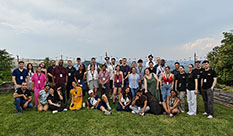
A substantial delegation of 16 students and four faculty members from HIT Holon Institute of Technology participated in week-long international activities and events at HMU-Hellenic Mediterranean University in Crete. ...