


More:
News & Stories
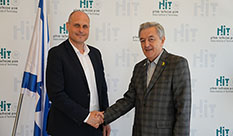
The senior management of HIT Holon Institute of Technology hosted Mr. Gideon Lustig, the new Israeli ambassador to Uzbekistan, for an official visit.
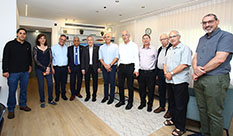
The management of HIT Holon Institute of Technology hosted the management of the Weizmann Institute of Science on their first official visit.
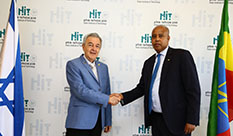
HIT's management hosted the Ethiopian Ambassador to Israel for an official visit.
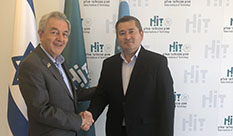
Prof. Eduard Yakubov, President of HIT, recently hosted the Ambassador of Uzbekistan to Israel, Mr.Aminov Jakhongir Davlatovich, who visited HIT for an introductory visit to examine new collaborations.
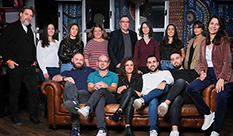
The “Demo Day” is the peak event of the mentoring program, which brings together entrepreneurs and potential investors.

Neta Cohen, a graduate of the Industrial Design Department at the Faculty of Design at HIT, has already won three international design awards for her final project
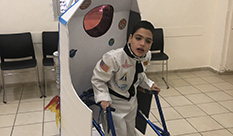
Industrial Design students from the Design Faculty at HIT developed, prepared, and designed unique Purim costumes for the children at Beit Issie Shapiro.
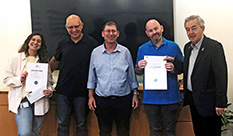
Certificates of recognition and cash prizes were awarded to the winners of the first three places in the "Sustainable Campus" competition, which was held at HIT. The projects were selected by the Institute's Green Campus" Committee from dozens of projects submitted to it.
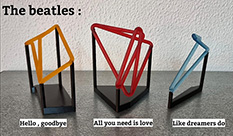
Applying geometric principles to music is not a new phenomenon. From as far back as the 5th century BCE, the Greek philosopher Pythagoras believed that numbers could explain everything, and that mathematics could guide our interpretation of the universe.

The Department of Digital Medical Technologies’ LIVING LAB is one of 340 living labs in the world accepted to the ENOLL (European Network of Living Labs).
 Additional programs

- News & Events
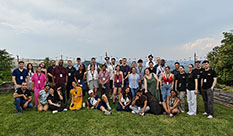
International Week of Interdisciplinary Studies and Academic Collaborations in Crete
A substantial delegation of 16 students and four faculty members from HIT Holon Institute of Technology participated in week-long international activities and events at HMU-Hellenic Mediterranean University in Crete. ...